



A drain clog that returns after snaking points to buildup still inside the line. Orange County homeowners need the right clearing method, not another short break from slow drains.
Hydro jetting vs snaking is a choice between cleaning pipe walls and opening a path through a blockage. Snaking uses a cable to break through a simple, local obstruction, such as hair in one drain, and may be appropriate for fragile pipes. For recurring clogs, grease buildup, sludge, or trouble along a main line, hydro jetting uses pressurized water to clear deposits that can quickly catch more waste. The right decision starts with the clog’s cause and pipe condition, because a damaged or weakened line should be inspected before high-pressure cleaning. A camera inspection helps match the method to the blockage, instead of choosing by price alone or repeating a clearing that did not last.
Homeowners weighing a quick opening against a fuller clean need to know when each method fits, and when pipe condition changes the recommendation. Next, Hydro jetting vs snaking: the quick answer sorts that decision by the signs at your drain and the likely cause; here’s how.
Hydro jetting vs snaking: the quick answer
For Orange County homeowners, the quick answer is based on the clog, not a price chart. Snaking moves a cable through a line to open a path through a stoppage. Hydro jetting uses water to clean buildup from pipe walls, so it is often considered when slow drains or backups return.
Need help choosing the right treatment? See our drain cleaning services for Orange County homes.
What each method does
A drain snake is a focused tool. It can break through a hair clog, soft blockage, or small obstruction and help water move again. Because it follows a narrow route, residue may remain along the inner wall of the drain line.
Hydro jetting takes a different approach. Water is sent through a nozzle to wash the inside of the line and move loosened debris downstream. It may fit lines with grease, sludge, or repeat blockage after a basic opening has not held.
The choice begins with a simple distinction: opening a drain is not always the same as cleaning its inside surface. Homeowners may notice that difference when a cleared drain slows again after regular use.
A treatment choice based on symptoms
The useful question in hydro jetting vs snaking is not which method wins every time. Ask what may be inside the line and whether the trouble keeps returning. A plumber may inspect the pipe before recommending a cleaning method.
- A single, simple clog: Snaking may open the passage without cleaning the whole line.
- Recurring slow drains or backups: Hydro jetting may be considered when buildup coats pipe walls.
- Possible damage or older pipe material: Inspection helps avoid a method that does not fit the line.
Keeping grease, wipes, and hard waste out of drains can also reduce avoidable trouble. The EPA wastewater program explains how wastewater is managed once used water leaves homes and other buildings.
The next step for a repeat clog
If a clog comes back soon after it was opened, ask what caused it. Also ask what the pipe walls look like. Clearing a path and cleaning the line are not the same task. That difference is the heart of the choice.
A professional drain assessment can match the method to the pipe condition. For lines with stubborn buildup, learn how hydro jetting is used for residential main lines before scheduling service.
How each drain cleaning method works
When homeowners compare hydro jetting vs snaking, the key difference is what each tool does inside the drain. A snake opens a path through a blockage. Hydro jetting uses water to clear material along more of the pipe interior. The right method depends on the clog and the condition of the line.
Snaking a blocked drain
A plumbing snake is a flexible cable sent through the drain toward the clog. Its working tip can pierce, break apart, or catch a blockage so water can move again. This makes snaking a direct approach when one obstruction is stopping flow.
Think of the cable as making an opening in a plugged passage. It can address a compact clog without washing the full inside surface of the pipe. If residue stays along the walls, slow drains or another stoppage may return later.
Snaking can make sense when a plumber needs to reach a single obstruction. It may also help the plumber learn how the line responds before recommending further cleaning. For more on method choice and expense, see this hydro jetting vs snaking guide.
Hydro jetting a drain line
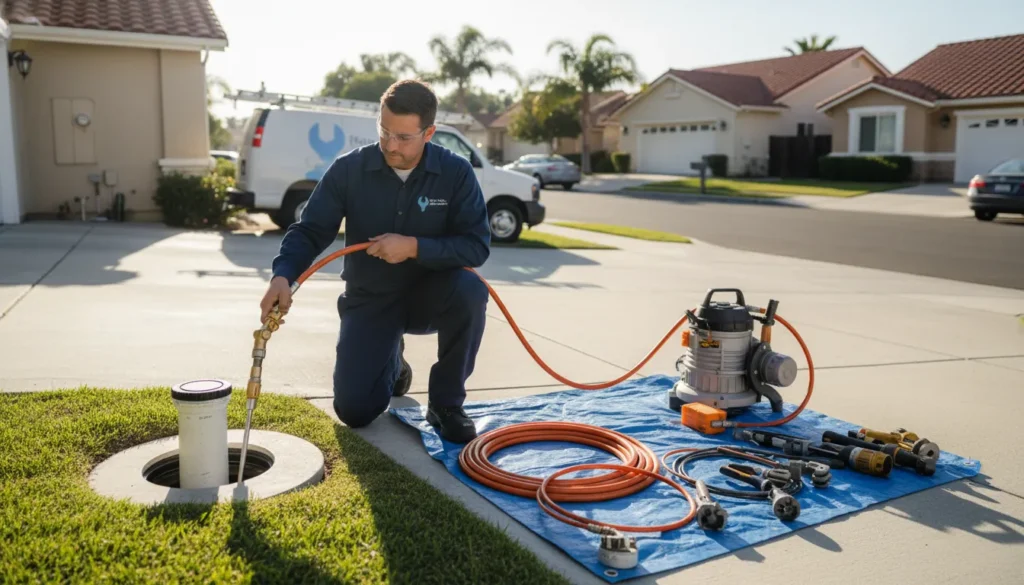
Hydro jetting sends a hose with a special nozzle into the drain line. Water sprays through the nozzle as the hose moves through the pipe. The spray loosens buildup and moves debris down the line. It does not only make an opening through one clog.
This cleaning pattern helps when a drain has repeated trouble tied to material inside the line. Grease, sludge, and other buildup may narrow the passage over time. Water jets address broad buildup in a different way than a cable tip.
911 Drain Lines & Plumbing uses 4,000 PSI hydro jetting equipment for this service. That number describes the equipment in use. It is not a promise that jetting fits every pipe or every stoppage. Homeowners can review the company’s hydro jetting service details before discussing their line.
A plumber may first need to understand where the drain is blocked and what caused it. Pipe condition also matters before water cleaning begins. This step helps match the tool to the job, instead of assuming one method fits every backup.
In simple terms, a snake is aimed at getting through an obstruction. Hydro jetting is aimed at washing away material within the line. Both tools solve drain problems in different ways, based on what is found in the pipe.
Hydro jetting vs snaking comparison table
Choosing by the clog pattern
Selecting between hydro jetting and snaking starts with the clog pattern, not a favorite tool. A cable snake opens a path through a local obstruction, such as hair. A water jet may fit grease, sludge, or repeat buildup across more of the pipe. A plumber should still check the line before either approach.
A backed-up sewer line needs prompt attention because wastewater can affect the home and public system. The EPA explains causes and response planning for sanitary sewer overflows, including blocked or damaged lines. For a home drain issue, this comparison can frame the first inspection conversation.
| Comparison point | Snaking | Hydro jetting |
|---|---|---|
| Method | Cable cuts or pulls through an obstruction. | Water flushes buildup through the line. |
| Best use | Single, reachable clog or quick opening. | Repeat clogs, grease, sludge, or heavy residue. |
| Limitations | May leave pipe-wall buildup in place. | May not suit a damaged line. |
| Pipe safety | Inspection still matters for weak pipes. | Pipe condition should be checked first. |
| Typical next step | Confirm flow and watch for a return clog. | Confirm flow and review any repair needs. |
This side-by-side view is not a diagnosis. The same symptom, such as a slow drain, can come from a small obstruction or wider buildup. It may also point to a damaged pipe. The aim is to choose a method that fits the likely cause and the line’s condition.
Pipe condition before cleaning
A method is only safe when it fits the pipe in front of the plumber. Camera inspection can show breaks, offset joints, corrosion, or weak sections before strong cleaning begins. When a line may be damaged, gaining access and planning repair can come before full cleaning.
If a line is sound but blockages return, hydro jetting may clear residue along the pipe wall. Snaking may be the right first move for a small blockage that needs an opening. Neither method fixes a broken, crushed, or poorly aligned pipe.
What happens after clearing?
A plumber can match the next step to what the cleared line shows. If flow returns and no major defect appears, simple upkeep advice may be enough. If a clog returns, camera findings can guide deeper cleaning or a repair plan. This makes the next call less dependent on guesswork.
Homeowners with a backed-up fixture or slow main line can start with professional drain cleaning services. Describe which drains are affected, when the problem began, and whether it has happened before. Those details help the technician decide what to inspect before recommending a tool.
When snaking is the right first step
A simple blockage in one fixture
Snaking can be a sound first move when one sink, tub, or toilet stops draining. A plumber feeds a cable into the drain to open a nearby clog. If other fixtures still work as expected, starting at the affected fixture is a measured choice.
This is the practical side of the hydro jetting vs snaking decision. Not every slow drain calls for a full line cleaning on the first visit. A professional starts with the symptoms, chooses a sensible tool, and checks the result before advising more work.
A small blockage may be caught early by a cable and removed without a broader service. The key question is what happens next. A drain that stays open points to a limited event, while repeat trouble may point to a deeper cause.
Older or uncertain pipe conditions
Snaking may be a careful first step when the pipe condition is not clear. An older line may need inspection before aggressive cleaning is considered. Clearing an opening can allow a camera to travel farther and show what is happening inside the line.
That order matters when a homeowner does not know the pipe material or past repair history. The plumber can avoid guessing about the line and base the next step on what is found. This approach protects the decision process, not just today’s drain flow.
A camera inspection makes sense when a clog returns or several drains slow at the same time. It can help a plumber locate the concern and plan a response. For public information about sewer overflow concerns, review the EPA overview of sanitary sewer overflows.
Signs that the first step is not the last
A first clearing is not a full diagnosis. If the same line slows again, repeated cable work may only address the immediate symptom. At that point, inspection can guide the next choice, which may involve cleaning, repair, or another focused service.
- Snaking fits an isolated fixture clog that needs a direct first response.
- Camera inspection fits recurring clogs, several slow fixtures, or unknown pipe condition.
- The next service should match the cause found in the line.
Orange County homeowners comparing choices can read this guide to hydro jetting vs snaking. A licensed plumber can then explain whether snaking solved a limited clog or whether the line needs a closer look.
When hydro jetting is worth scheduling
A professional assessment first
Schedule a professional assessment before choosing a drain cleaning method. That first step protects older piping and helps match the cleaning plan to the blockage. For Orange County homes, 911 Drain Lines & Plumbing can assess the line before recommending hydro jetting or a less forceful option.
The choice in hydro jetting vs snaking depends on what is inside the pipe. A snake can open a path through a limited clog. Hydro jetting may fit a line with deposits on the inner walls, because water cleaning addresses more than one narrow opening.
Clogs that point to buildup
Recurring clogs deserve a closer look when a drain has already been cleared and soon slows again. Grease can cling to a kitchen drain line. Sludge and scale can also narrow a pipe over time, leaving less room for wastewater to pass.
This pattern is different from a small, isolated blockage. If buildup remains on the pipe wall, making a hole through the clog may not address the cause. A technician can explain how the blockage type changes the hydro jetting vs snaking decision.
Hydro jetting is worth discussing when grease, sludge, or scale keeps leading to service calls. The goal is not to choose the strongest tool by default. It is to choose cleaning that fits the pipe condition and the material blocking flow.
A one-time stoppage in one fixture may still call for a simpler repair. A main line with repeated grease or scale buildup presents a different problem. The assessment separates a quick opening from a cleaning plan meant to remove stubborn residue.
Sewer main warning signs and roots
Several drains that slow or back up together call for an assessment of the main line. This is also the right time to report gurgling fixtures, wastewater backing up, or repeated trouble at lower drains. Those details help the plumber plan an inspection rather than guess.
Roots require the same careful approach. They may enter a damaged or open joint, but clearing them is only part of the issue. The line should be checked first, so the plumber can decide whether cleaning is suitable and whether damage needs attention.
The U.S. Environmental Protection Agency notes that inspection can find grease, debris, and root intrusion linked with sewer blockages. That supports assessing the line before choosing high-pressure cleaning, especially when symptoms suggest a sewer main problem.
Timing matters when wastewater starts to rise or a toilet affects nearby drains. Do not keep testing fixtures during an active backup. A plumber can trace the symptoms, inspect the line as needed, and discuss whether jetting is the safe next move.
If clogs keep returning, or several fixtures are affected, scheduling an evaluation can clarify the next step. You can ask what was found, whether the pipe can safely be jetted, and what maintenance may reduce another backup. If service is appropriate, the team can outline a clear plan without pushing unnecessary work.
How to choose safely for older Orange County pipes
Start with the line condition
For an older Orange County home, the safe choice begins with the line condition, not the cleaning tool. As sewer systems age, deterioration, blockages, and collapses can become concerns. EPA guidance explains that television inspection is an effective method for viewing a sewer’s inside condition. This sewer inspection guidance supports checking the line before forceful cleaning.
A camera inspection can help find cracks, shifted joints, roots, corrosion, buildup, or a low spot in the line. Those findings guide the hydro jetting vs snaking decision. The goal is to clear the problem without placing avoidable stress on a weak pipe.
Warning signs to report first
Tell the technician when a clog returns after a prior cleaning. Also mention slow drains in several rooms, toilets that gurgle, sewer odors, or a tub that backs up when another fixture drains. A pattern across fixtures can point to a deeper line problem.
- Note which fixtures are slow or backing up.
- Share past drain cleaning or sewer repair records.
- Ask whether a camera check is needed before cleaning.
- Ask what the video shows before approving the next step.
Homeowners often compare methods after a repeat backup. An existing hydro jetting vs snaking guide can help explain the basic options. Yet an older home’s inspection results should shape the choice for that line.
Care around clay and cast iron
Older clay pipe may have cracked sections or weak joints. Cast iron may develop scale, corrosion, or thin areas over time. High-pressure water can damage aged or brittle clay and thin-walled cast iron, based on the service guidance from 911 Drain Lines & Plumbing. For a small clog in a fragile line, snaking may be the safer first step.
If inspection shows a sound line with stubborn deposits, a technician may select hydro jetting. If the line appears damaged, the first step may be gentler clearing or repair planning. A licensed technician can explain the video findings, the likely cause, and the safest plan before work begins.
A simple decision process for recurring clogs
Recurring clogs are a pattern to track, not a reason to repeat the same quick fix. Use this five-step process to choose the next service. Base the choice on symptoms, pipe condition, and the blockage likely inside the line.
What to record before service
-
Note the symptoms. Write down which drains slow down, back up, gurgle, or smell foul. Note whether the problem affects one fixture or several rooms. Also record how soon the clog returns after a prior cleaning.
-
Stop adding chemical drain cleaners. Do not keep pouring products into a line that continues to clog. Tell the plumber what you used and when you used it. This helps the technician prepare before opening or cleaning the drain.
-
Arrange cleaning or an inspection. A repeat problem deserves a closer look rather than another guess. The EPA states that cleaning and inspecting sewer lines are essential to a working system. A camera inspection can show the line condition before a cleaning method is chosen.
-
Match the method to the issue. Snaking can open a simple, local obstruction by breaking through it. Hydro jetting uses pressurized water to scour buildup from pipe walls. When weighing hydro jetting vs snaking, ask whether you need an open path or removal of deposits.
-
Plan the next check. After service, keep any inspection notes, video, and the service date. Ask when the line should be checked again based on its condition and use. If slow drains return, act early instead of waiting for a backup.
This process helps separate a one-time clog from an issue that keeps coming back. It also gives your plumber useful details at the first visit. A clear history may prevent repeated short-term fixes.
When a camera inspection helps
Recurring trouble may have more than one cause. Grease buildup, scale, roots, or pipe damage can lead to similar signs. A camera inspection gives the plumber a view inside the line before recommending pressure cleaning.
This matters for older or fragile pipes, where condition should guide the next step. A plumber can explain whether a local clog calls for snaking. If deposits line the pipe walls, hydro jetting may fit the findings better.
The goal is not the strongest cleaning method every time. It is the right method for the pipe and the cause. Inspection findings can make that choice easier to understand.
Schedule the right next step
If a drain keeps slowing down or backing up, arrange an evaluation before the next overflow. Orange County homeowners can review professional hydro jetting services and request drain cleaning based on the symptoms found.
Keep a brief record after the appointment: what was found, what was cleaned, and what follow-up was advised. That record helps you respond faster if the same drain slows again.
Frequently Asked Questions
Is hydro jetting better than snaking?
Neither method is better for every clog. Snaking opens a minor, localized obstruction, while hydro jetting scours buildup from pipe walls. Hydro jetting is often a stronger fit for recurring grease or scale deposits. The EPA identifies television inspection as an effective way to assess a sewer line’s internal condition before selecting treatment.
How much does it cost to hydro jet a sewer line?
Hydro jetting cost in Orange County depends on access, line length, clog severity, and whether inspection or root cutting is needed. A price offered before examining a recurring sewer problem may omit work required to clear it safely. Ask for a written estimate that identifies the cleaning method, inspection steps, and follow-up recommendations before approving service.
Does hydro jetting clean the pipe walls completely?
Hydro jetting is designed to wash grease, scale, and residue from the inside surface of a drain or sewer line, rather than opening only a passage. The company’s service guidance describes this scouring action. It cannot repair a collapsed, offset, cracked, or heavily corroded pipe, so ongoing symptoms still call for inspection.
Can hydro jetting damage old pipes?
Yes. High-pressure water can damage sewer pipe already weakened by age, corrosion, cracks, or brittle materials. Company guidance specifically identifies older clay and thin-walled cast iron as concerns. A plumber should assess pipe condition before jetting; snaking or repair planning may suit a fragile line better.
When should I choose snaking over hydro jetting?
Snaking can make sense for a single, recent clog in one fixture, particularly when the likely obstruction is localized. It may also be safer when inspection indicates that an older or fragile pipe could not withstand high-pressure cleaning. If the clog repeatedly returns, snaking may only restore flow while leaving pipe-wall buildup that requires a different solution.
Schedule the right drain cleaning service
If you are weighing hydro jetting vs snaking because the same clog keeps coming back, the next step is a professional look at the line. 911 Drain Lines & Plumbing serves Orange County homeowners with licensed, insured drain cleaning support and clear guidance before work begins.
Schedule professional drain service and get help choosing the method that fits your pipe, clog, and symptoms.