



Water pouring from a burst pipe, a toilet overflowing onto the bathroom floor, sewage backing up into a shower — plumbing emergencies don't wait for business hours. When you call us for an emergency in Anaheim, our technicians roll right away, but the minutes before we arrive matter — they can be the difference between a contained mess and serious damage. Here's exactly what to do.
Stop the Water First
This is step one in almost every plumbing emergency: stop water from flowing into the problem area. If the issue is at one fixture — a toilet, a sink, a washing machine — look for the shutoff valve right behind or under it. Toilets typically have a small valve on the wall behind the bowl; sinks usually have a pair of valves under the cabinet. Turn them clockwise until they stop.
If you can't find a fixture valve, or water is coming from inside a wall or ceiling, go straight to your home's main water shutoff. In most Anaheim homes it's on the front wall of the house, in the garage, or near the water meter by the sidewalk. Every adult in your household should know where this valve is — take a minute today to find it and make sure it turns. Older valves can seize up from years of sitting; if yours won't budge, leave it alone and tell us when you call.
Burst Pipes: Act Fast, Then Get Clear
A burst or severely leaking supply pipe can fill a room quickly. Shut off the main water valve first. Then open a faucet at the lowest point in the house (often an outdoor hose bibb or downstairs sink) to drain remaining pressure, and another faucet upstairs to let air in so the water drains down. Move furniture, rugs, and electronics out of the water's path if you can do it safely, and kill power to any outlets the water is reaching — but never touch a breaker panel if you're standing in water.
Don't try to cut out or patch the pipe yourself. Temporary tape and clamps have a way of failing at the worst moment. Stabilize the situation, then let a professional handle the repair.
Overflowing Toilets: Stop the Flush Cycle
An overflowing toilet is the one emergency people tend to make worse by panicking and flushing again. Don't flush it a second time — that just adds more water to the bowl. Instead, reach behind the toilet and turn the supply valve clockwise. If the water keeps rising, pop the tank lid off and push the flapper down over the drain opening to stop the tank from emptying into the bowl. Lay down towels to contain the spill and keep everyone away from it until we arrive, since overflow water can carry bacteria.
If multiple fixtures are backing up at once — the toilet gurgles when the shower drains, or water comes up in a tub — that's likely a main sewer line blockage, not just a clogged toilet. Stop running all water in the house immediately.
Leaking Water Heaters: Shut It Down Safely
If your water heater is leaking, shut off the cold water supply valve on top of the unit. For a gas water heater, turn the gas control knob to "pilot" or "off" — only if you can reach it without wading through standing water. For an electric unit, switch off the breaker labeled for the water heater at your electrical panel. Then attach a garden hose to the drain valve near the bottom of the tank and run it to a floor drain or outside to relieve pressure.
A word of caution: if the tank is making popping or rumbling sounds, bulging, or leaking heavily from the seams, give it space. Just shut off the utilities you can reach safely and wait for us.
Sewer Backups: Protect Your Health
If sewage is coming up through drains, toilets, or showers, stop using all water in the house: no flushing, no running faucets, no laundry. Keep children and pets out of the affected area. Don't try to plunge or snake a sewer backup yourself; without knowing where the blockage is, you can push contaminated water into places it hasn't reached yet. Open windows for ventilation if the smell is strong — we'll advise you on the rest when we're on site.
What to Have Ready When You Call
Before you dial, gather a few details that help us bring the right equipment: which fixtures are affected, whether you've shut off the water, where the water is coming from, and whether you smell gas or sewage. If you know your home's age or have had sewer or repiping work done before, mention that too.
When you're ready, reach out to our Anaheim plumber team — we're staffed around the clock, so a late-night call gets a real response, not a voicemail box.
What NOT to Do
A quick list of the mistakes we see most often: pouring chemical drain cleaner into a fully backed-up line (it can sit in the pipe and splash back), forcing tools deep into drains (they can puncture pipes), continuing to use water "just to check" whether the problem is still happening, and tearing open a wall to find a leak. Contain what you can, and let trained technicians diagnose the rest.
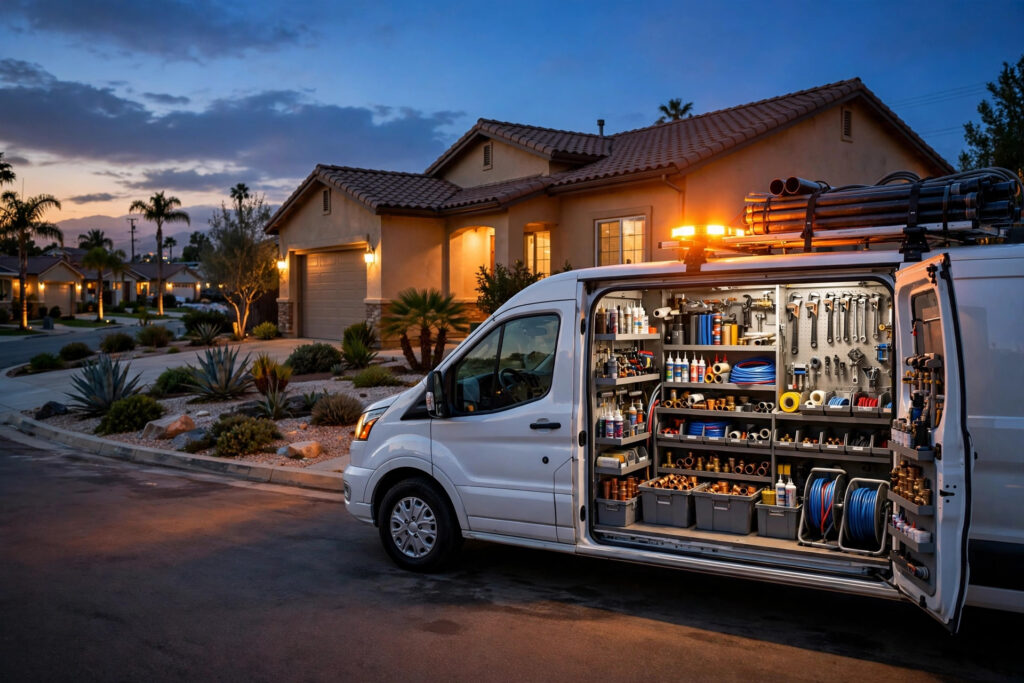
When a plumbing emergency hits your Anaheim home, call 911 Drain Lines & Plumbing at (714) 746-7611. We're on call 24/7 with fully stocked trucks, so most emergencies are handled in a single visit — and the sooner you call, the less damage the water does.