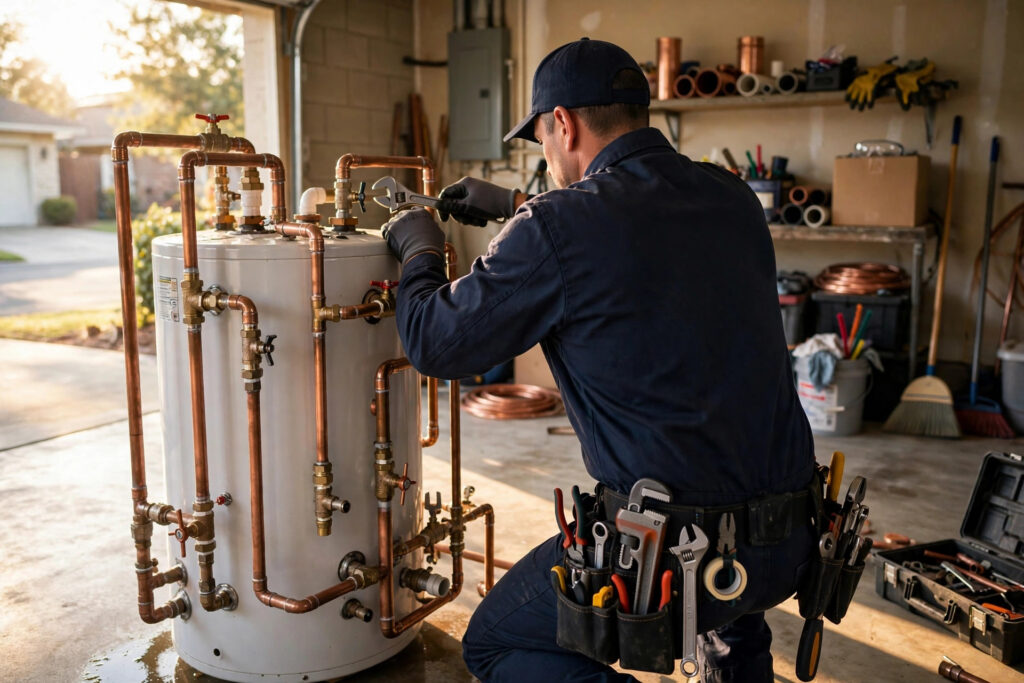




Your water heater works quietly in the garage or side yard until the morning the shower runs cold. In Adelanto, where high-desert summers push well past 100 degrees and winter nights dip below freezing, water heaters take a particular kind of beating — and the area's mineral-heavy groundwater doesn't do them any favors either. Whether you own an older ranch home off Bellflower Street or a newer tract home near El Mirage Road, here's what to watch for and how to decide between repair and replacement.
How Adelanto's Hard Water Affects Your Water Heater
Desert groundwater tends to carry a high load of dissolved minerals, especially calcium and magnesium. Inside a tank water heater, those minerals settle out of the hot water and build up as sediment on the bottom of the tank. A few inches of sediment acts like insulation between the burner and the water, forcing the unit to work harder and longer to heat the same amount of water. Over time, that extra strain shortens the life of the tank and the burner.
Sediment also feeds other problems. It can clog drain valves, cause the tank to make rumbling or popping noises, and create hot spots that weaken the steel tank wall from the inside. If you have never had your tank flushed — or it's been years — a routine flush is one of the simplest things you can do to protect it. In a hard-water area like Adelanto, a yearly flush is a reasonable habit.
Signs Your Water Heater Is Failing
Most tank water heaters last roughly a decade, sometimes a bit more with good maintenance and sometimes less in hard-water conditions. Watch for these warning signs:
- Rusty or discolored hot water. If only the hot water runs brown or rust-colored, the inside of the tank is likely corroding. This is one of the clearest indicators that the tank itself is reaching the end of its life.
- Water pooling around the base. A damp or puddled area under the tank can mean the tank has developed a leak. Tank leaks do not get better on their own — they get worse.
- Inconsistent or insufficient hot water. Running out sooner than you used to, or water that never gets quite hot enough, can point to a failing heating element, a worn-out thermostat, or heavy sediment buildup.
- Rumbling, popping, or banging sounds. These noises usually mean sediment has built up on the bottom of the tank and water is trapped underneath it, boiling as the burner fires.
- Rising utility bills without another explanation. A struggling water heater runs longer cycles, and that shows up on gas or electric bills.
If you notice any of these, it's worth having the unit looked at before it fails outright. A dead water heater is inconvenient; a tank that ruptures and floods the garage is a much bigger problem.
When to Repair vs. When to Replace
Not every symptom means a new unit. A failed thermostat, a worn heating element, a bad thermocouple, or a faulty pilot assembly are all repairable problems, and if the tank itself is sound and relatively young, repair is usually the sensible call.
Replacement starts making sense when:
- The tank is over 10 years old and showing any of the signs above.
- The tank is leaking from the body of the unit — a leaking tank cannot be repaired, only replaced.
- Repairs are becoming a pattern. If you've called someone out twice in a year for the same unit, the money is better spent on a new one.
- You want better efficiency. Newer models, especially those meeting current efficiency standards, typically use less energy than a unit built a decade ago.
If you're unsure, a licensed plumber can check the unit's age, inspect the tank condition, and give you a straight recommendation — water heater repair is the right starting point for most diagnosis calls.
Tank vs. Tankless: What Makes Sense in Adelanto?
Many Adelanto homeowners ask about tankless water heaters when replacement time comes. Tankless units heat water on demand, so you get continuous hot water and no standby energy loss from keeping 50 gallons hot around the clock. They also take up far less space, which is nice in tight garages.
There are trade-offs to consider. Tankless units cost more up front and often need a gas line or electrical service evaluation, since they draw a lot of energy in short bursts. In hard-water areas, they also need regular descaling — mineral buildup can choke the heat exchanger faster than sediment hurts a tank. For some households, a high-efficiency tank model with proper maintenance is the more practical choice.
There's no universal right answer; it depends on your household size, hot-water habits, fuel type, and budget. We walk through the options with every replacement customer so you can pick what fits your home.
Winter Prep for High-Desert Nights
Adelanto's freezing winter nights are worth planning for. Water heaters installed in unheated garages or exterior enclosures are vulnerable when temperatures drop hard. Insulating exposed hot-water pipes, keeping the area around the unit clear, and knowing where your water shutoff valve is can save you from a burst pipe or a frozen line feeding the unit. If a pipe feeding your water heater freezes and bursts overnight, we offer 24/7 emergency service — call us right away and shut off the water if you safely can.
When to Call Us
Some water heater issues are urgent: a leaking tank, the smell of gas near a gas unit, or no hot water at all. Those warrant a call any time, day or night. For everything else — strange noises, lukewarm water, a unit that's simply getting old — scheduling a visit sooner rather than later keeps a small problem from becoming an emergency.
If replacement is the answer, our water heater replacement service includes hauling away the old unit, installing the new one to code, and making sure everything is vented and connected safely.
For water heater repair and replacement in Adelanto, CA, call 911 Drain Lines & Plumbing at (714) 746-7611. We are available 24/7 for emergencies, and we will give you an honest assessment of whether your unit should be repaired or replaced.