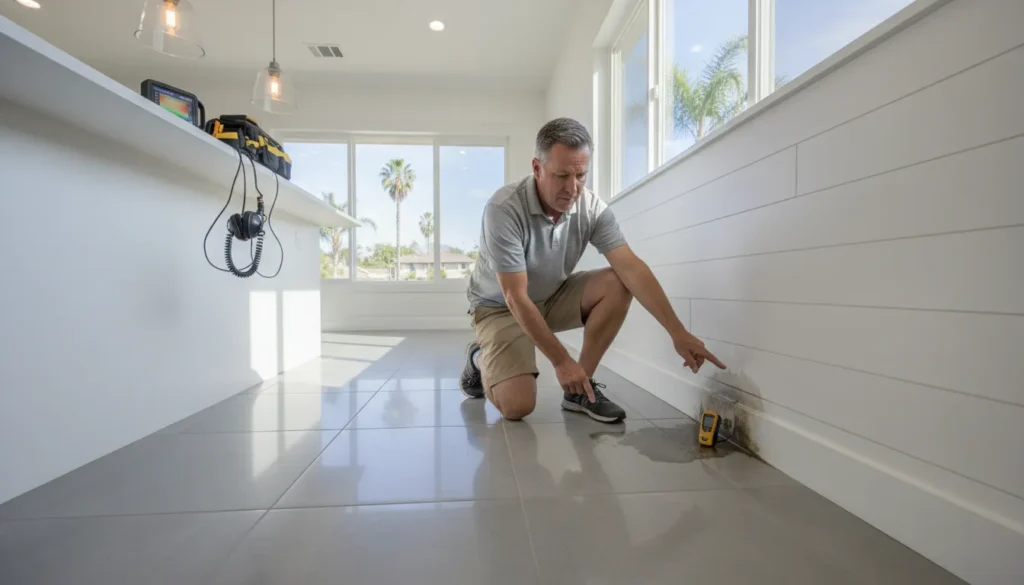




A warm floor and a climbing water bill can signal trouble beneath the slab. In Orange County, waiting can turn a hidden pipe leak into damaged flooring and a harder repair.
Professional slab leak repair Orange County service is needed when a pipe beneath concrete leaks, risking floors, finishes, and the home’s structure. Warning signs include an unexplained water bill increase, warm or damp flooring, low pressure, running-water sounds with fixtures off, and new cracks. A city water-system leak guide also flags unexplained water use increases and pressure loss as reasons to investigate an underground leak quickly. Repair cost often depends on the leak location, pipe condition, access under the slab, and whether a spot repair or reroute makes sense. Professional detection can locate the leak before repair choices are made, limiting needless demolition and giving homeowners a clearer scope and price.
Orange County homeowners need to know which clues justify a fast inspection and which repair factors drive the final bill. Next, Slab leak repair Orange County warning signs that should not wait identifies the warning signals that call for action. Here’s how.
Slab leak repair Orange County warning signs that should not wait
A possible slab leak is not a watch-and-wait problem. Water can keep moving below concrete while the first signs look small. If your Orange County home shows several clues at once, arrange slab leak repair Orange County service promptly.
Because slab leaks involve pipes hidden under a concrete slab, surface water is not required before concern is reasonable. Use the pattern of signs to judge urgency, not a single stain after a spill.
Billing changes and water sounds
A higher bill without a clear change in use is a useful early warning. The City of Grand Rapids lists an unexplained increase in water use as a leak sign. Compare current use with the same season and check for obvious causes, such as a running toilet.
Listen after faucets, showers, dishwashers, washing machines, and sprinklers are off. The sound of flowing water with no normal demand needs fast investigation. For a simple first check, learn how to detect hidden leaks at the meter.
Floor and foundation clues
Warm flooring can point to a hot-water line problem below the slab. A damp patch, damp carpet edge, or musty smell also raises concern. Take note when the same spot returns after cleanup or stays warm overnight.
Act sooner if a floor begins to lift, buckle, or feel uneven underfoot. Cracks in concrete, tile, or nearby paving matter when they appear with moisture or changing water use. These paired clues call for professional leak detection, not an attempt to open the floor.
Reasons to call now
Low water pressure is more than an annoyance when it starts without a known utility notice or fixture fault. Treat pressure loss as urgent when it appears with wet flooring, warm spots, new cracks, or steady water sounds.
Walk the outside edge of the home as well. Pooling water, soft soil, mossy patches, or one unusually green area can flag water underground. Brown irrigation zones may also fit the pattern if water flow has dropped.
- Call now: Water seems active below a floor, a damp area spreads, or flooring starts to rise.
- Call soon: A bill increase pairs with a warm spot, pressure drop, water sound, or musty odor.
- Keep records: Note bill changes, photograph damp or cracked areas, and record when sounds or odors appear.
Call promptly when any structural clue appears, or when two water-loss clues occur together. Move rugs and belongings away from damp areas. A plumber can locate the leak and explain repair choices before more disruption occurs.
How much does slab leak repair cost in Orange County?
Orange County homeowners often want one number before opening a floor or rerouting a line. The honest answer is that slab leak repair Orange County pricing depends on what the plumber finds below the slab. A published cost guide places most repairs between $2,500 and $4,000, within a broader $1,500 to $6,000 range.
Understanding the estimate
An estimate normally begins with finding the leak, not breaking concrete on a guess. Professional slab leak detection helps locate the failed line and maps the least disruptive repair path. This first step can keep a small access area from turning into needless floor removal.
Once the location is clear, the quote should separate plumbing work from finish repairs. Ask whether the price includes opening the slab, repairing or routing pipe, and testing the line. Then ask about concrete closure and replacement of tile, wood, or carpet.
Repair scope and added restoration
Repair method changes the bill because it changes access, labor, and restoration. A spot repair may make sense for one reachable failure in otherwise sound pipe. A reroute can avoid cutting through more finished rooms when a new path is practical. Whole-home repiping may be discussed when several lines are failing or the pipe system is worn.
The table below shows what each repair path may place on an estimate. It is a planning aid, not a fixed price list. Materials, home layout, access, permits, and finish choices still shape the quote.
| Cost factor | Spot repair | Reroute | Repipe |
|---|---|---|---|
| Pipe work | One damaged area. | New path around slab. | Many supply lines replaced. |
| Slab access | Often needed at leak. | May reduce slab cutting. | Often avoids old under-slab lines. |
| Finish repairs | Floor and concrete near access. | Wall or ceiling patching possible. | Several wall patches possible. |
| Common cost driver | Hard-to-match flooring. | Length of new route. | Home size and pipe layout. |
Concrete work is only one part of restoration. If water damaged flooring, cabinets, drywall, or baseboards, those repairs may appear as separate lines. Homeowners comparing a reroute with a larger project can review the cost to repipe a house. Ask for both options in writing.
What raises the final price?
Costs rise when the leak sits below stone, tile, cabinetry, or another hard-to-match finish. They can also rise when access is tight, several failing areas are found, or the selected route is long. Copper or other material choices may affect labor and material costs as well.
Before approving work, request a written scope that lists detection, pipe repair, concrete closing, flooring work, and testing. An on-site inspection turns a broad range into a home-specific quote. That keeps the decision based on the actual leak path and the finishes that need repair.
How plumbers detect slab leaks without tearing up the floor
A hidden leak does not mean a plumber starts by cutting concrete. For slab leak repair in Orange County, the first goal is to confirm water loss and narrow its location. A focused diagnosis helps the plumber plan the smallest repair opening, if one is needed.
Starting checks and instrument testing
Before tools are placed over the slab, the plumber checks visible fixtures and shuts off water-using equipment. Unexplained water use can point to a buried line problem. The City of Grand Rapids lists a drop in water pressure or flow as a possible leak sign.
Homeowners may learn how to detect hidden leaks before a visit. The plumber then repeats and records the check with the home quiet. These first results show whether more testing under the floor makes sense.
- Turn off water use. Faucets, ice makers, sprinklers, and appliances are checked or paused. This removes normal water use from the test.
- Read the meter. With no fixtures running, the plumber watches for meter movement. Continued movement gives a reason to isolate the plumbing lines.
- Pressure test the line. The suspected supply line is separated for testing. A pressure loss helps show that the closed line may be leaking.
- Listen through the slab. Acoustic equipment is placed at chosen points on the floor. The plumber compares sounds to narrow the strongest leak area.
- Scan for moisture and heat. Thermal imaging checks temperature patterns across the surface. Moisture readings add another map of where water may have traveled.
- Trace the pipe route. Line tracing shows the likely course of the hidden pipe. The plumber marks a repair area based on the combined readings.
Mapping evidence before repair
No single reading settles every case. Sound, temperature, moisture, and pipe location are compared until they point to the same area. This helps separate an under-slab loss from a wet fixture, an appliance leak, or a surface spill.
Moisture mapping checks for damp materials above or beside the slab. Thermal imaging shows surface temperature patterns, not a view through concrete. Line tracing helps the plumber follow the pipe path and avoid guessing where it turns.
What the findings mean
Tests may locate a likely leak area without opening floors during diagnosis. A professional slab leak detection visit records the likely source before repair begins. The plumber can then explain access or rerouting choices based on the findings.
Some repairs still need access to the failed pipe, while others may follow a different route. The detection work gives the homeowner a defined problem to review. It also keeps repair planning focused on evidence instead of broad floor removal.
Repair options: spot repair, reroute, repipe, or trenchless work
After a leak is located, the repair plan should fit the line, not just the wet spot. For slab leak repair Orange County homeowners should weigh access, pipe condition, past leaks, and the rooms affected.
Spot repair and trenchless access
Spot repair means opening the slab at one confirmed failure and replacing that short damaged section. It may fit an isolated break when the rest of the line appears sound. It also requires a clear repair path through flooring, concrete, and any nearby fixtures.
Accurate slab leak detection matters before any floor is opened. A repair under a cabinet, tile layout, or finished living area may create more restoration work. In that case, access can shape the choice as much as the pipe itself.
Trenchless work aims to limit large open trenches or wide slab cuts. It may be useful when the pipe layout and damage support that method. It is not an automatic fit for every leak, since the damaged line still needs a workable repair route.
Rerouting above the slab
Rerouting abandons the leaking run beneath the concrete and installs a new route through walls or ceilings. This avoids cutting open a long path across the floor. It can be practical when an above-slab route reaches the same fixtures without awkward wall repairs.
Material also affects the estimate and long-term plan. Copper repairs may cost more than PVC repairs due to material and labor cost. This comparison appears in University of California, San Francisco guidance on slab leak work.
The planned route must match the home’s layout. A plumber should state the pipe material, fitting method, test steps, and needed access before the homeowner approves work.
When repiping is the sounder plan
A single spot repair is less appealing when leaks keep returning on the same aging system. Repiping replaces more of the problem piping instead of chasing one failed section at a time. It can avoid repeated slab openings when several runs are at risk.
Before choosing between rerouting and repiping, ask for a written scope and restoration plan. Homeowners comparing the cost to repipe a house should also compare what each quote leaves behind, abandons, or repairs.
- Where is the leak, and what floor or wall access is needed?
- Is this the first failure, or part of a recurring leak pattern?
- Will the work disturb tile, cabinets, or finished rooms?
- Does the estimate cover concrete, drywall, paint, and flooring restoration?
- What pipe material, warranty, permits, and testing are included?
The lowest opening price may not be the lowest full project cost. Compare leak repair, access damage, finish repairs, and the chance of another failure on the same line.
Does homeowners insurance cover slab leak repair?
Coverage for a slab leak depends on your policy and the cause of the loss. Your insurance carrier makes that decision, not the plumber. If you need slab leak repair in Orange County, first limit the water damage. Then document the problem and review your coverage.
What a carrier may review
A claim can involve separate costs: water damage, access through flooring or concrete, pipe repair, and restoration work. Ask your carrier how your policy addresses each cost. Do not assume one covered item means the whole repair is covered.
Some policies may cover sudden accidental water damage, but not the failed pipe itself. Wear, corrosion, or ongoing seepage may be handled differently. A licensed plumbing report can describe the leak location and repair plan. It cannot promise claim approval or interpret your policy.
Records that help explain the damage
Keep a clear record before repairs change the scene. Take photos or video of wet flooring, damaged baseboards, standing water, and affected belongings. Save bills, inspection findings, leak detection notes, and repair estimates in one folder for the claim discussion.
An unexplained jump in water use can point to an underground leak. A public water leak detection guide also lists pooling water and low water pressure as warning signs. Note what you saw, when you found it, and steps taken to reduce damage.
- Record the date and time you first noticed signs of water damage.
- Photograph affected rooms before cleanup, when it is safe to do so.
- Request a written leak location and repair recommendation from the plumber.
- Keep receipts for urgent steps used to protect the home.
Accurate location details matter because access and repair options can vary. A slab leak detection visit can help define the damaged line before the repair scope is set.
Damage control while a claim is reviewed
Do not leave active leaking water in place while waiting for a coverage answer. Shut off water if needed, move items from wet areas, and arrange safe drying or cleanup. Tell the carrier what emergency steps were needed and keep the records.
Call your carrier soon after finding the damage and ask what records it needs. Ask whether an inspection is required before permanent repairs start. If a claim is opened, save the claim number and adjuster contact details with your repair records.
This approach protects the home while leaving coverage decisions with the insurer and your written policy. It also helps your plumber explain the repair need without offering insurance advice.
What should you do if you suspect a slab leak?
A possible slab leak can feel urgent because the water source is out of sight. Stay calm, protect your home, and arrange skilled help before damage spreads. These steps help while you wait for a plumber.
First steps to limit water damage
When floors are damp, water keeps moving, or a room is at risk, act with care. Keep people away from wet areas near outlets or appliances. If water is spreading, use the home’s water shutoff until a plumber can assess the line.
- Turn off faucets, showers, sprinklers, washing machines, and dishwashers. Listen for water flow after fixtures are off.
- Check the water meter if you can reach it safely. Movement while fixtures are off can give the plumber useful information.
- Move rugs, boxes, furniture, and stored items away from damp floors. Use towels or a container for visible seepage.
- Take photos of wet flooring, baseboards, walls, and affected belongings. Note when you first saw water or heard running water.
- Do not cut drywall, lift flooring, or break concrete to search for the pipe. Wait for trained leak detection.
- Call a plumber promptly. Share the meter reading, wet locations, sounds, pressure changes, and any shutoff steps you took.
Useful signs to record
Your notes can help narrow the search area. A city water leak guide lists unexplained water use and a drop in pressure or flow as possible leak signs. It also notes pooling water and uneven floors among clues worth recording in a water leak check.
If you are unsure how to inspect the meter, follow this guide to detect hidden leaks. Do not keep testing fixtures if water is already damaging floors or belongings. Your goal is to gather safe observations, not to locate the broken pipe yourself.
Professional detection before repairs
Do not assume the first damp spot is directly above the leak. Water can move beneath a slab before it appears indoors. Because pipes are hidden under concrete, slab leak repair may require special knowledge and equipment before a repair plan is chosen.
Do not start demolition while waiting for help. Opening concrete without locating the leak may create extra disruption and still miss the damaged section. Keep the area clear so the plumber can inspect it quickly.
For slab leak repair in Orange County, a fast call can reduce uncertainty and help protect the affected area. 911 Drain Lines & Plumbing offers 24/7 emergency service with no overtime charges. Homeowners can request help after hours without an overtime fee.
Frequently Asked Questions
How much does slab leak repair cost in Orange County?
For slab leak repair in Orange County, the price depends on leak location, pipe material, repair method, and required access. A published slab leak cost overview reports that many repairs fall between $2,500 and $4,000. Costs can rise when locating the leak or opening concrete requires more labor. A written estimate should separate detection, pipe repair, flooring, and drying or restoration.
How do you detect a slab leak without tearing up the floor?
A plumber can investigate a suspected slab leak before opening flooring. The process may include checking the meter, pressure, fixture isolation, and specialized leak-locating equipment. The goal is to narrow the repair area instead of removing concrete broadly. Detection is important because slab pipes are hidden, and access difficulty affects labor costs.
Is slab leak repair covered by homeowners insurance?
Homeowners insurance coverage varies by policy and by the cause of the leak. A policy may cover sudden resulting damage, such as damaged flooring, while excluding pipe repair or long-term seepage. Before authorizing restoration, report the loss promptly, take photos, save leak-detection findings, and ask the adjuster what documentation is required. A plumber can provide repair findings, but the insurer decides coverage.
How long does it take to repair a slab leak?
Repair time depends on the leak location, the condition of the affected pipe, and the chosen repair route. A focused spot repair may involve less disruption than rerouting or repiping damaged lines. Detection usually comes first, followed by an estimate that identifies access and restoration work. If water is actively escaping, shut off water when safe and arrange inspection promptly.
Ready to Schedule a Slab Leak Inspection Today?
Waiting on signs of a slab leak can allow a manageable concern to become a larger repair decision. Uncertainty also makes it harder to plan your budget, protect finished areas, and decide what repair path makes sense. Starting now gives you a clear diagnosis sooner, so you can respond before the problem disrupts more of your home.
Ready to schedule a slab leak inspection? Schedule a slab leak inspection to get clear next steps for your Orange County home. Rather than waiting for damage or costs to guide your choice, start with an informed plan. A timely inspection can help you understand the issue, discuss repair options, and plan the work with fewer surprises.