



When your AC is blowing hot air in the middle of a Southern California heatwave, it feels like an emergency. Temperatures in Orange County and the Inland Empire regularly top 90 degrees during summer, and a malfunctioning air conditioner can turn your home into an oven within hours.
The good news: most causes of an AC blowing hot air are identifiable, and some are even fixable without calling a technician. Below, we break down the seven most common reasons your air conditioner is pushing warm air, what you can do yourself, and when it is time to call a licensed HVAC professional.
Schedule your AC repair today or call 911 Drain Lines and Plumbing at (714) 909-1723 for 24/7 HVAC service in Orange County.
How Does Your Air Conditioner Actually Cool Your Home?
Your AC does not create cold air. It removes heat from indoor air using a refrigerant cycle. The compressor pressurizes refrigerant and sends it through condenser coils (outside) to release heat, then through evaporator coils (inside) to absorb heat from your home’s air. A blower fan pushes the newly cooled air through your ductwork. When any part of this cycle breaks down, you end up with warm air blowing from your vents.
Understanding this basic process helps you troubleshoot the problem faster. Let’s walk through the seven most common culprits.
Why Is Your Thermostat Causing Hot Air From the AC?
This is the most common reason for an air conditioner blowing hot air, and it is also the easiest to fix. If someone accidentally switched the thermostat from “Cool” to “Heat,” or if the fan is set to “On” instead of “Auto,” you will feel warm air coming from the vents even though nothing is actually broken.
When the fan is set to “On,” it runs continuously, including when the cooling cycle is off. That means it circulates unconditioned, room-temperature air between cycles, which feels warm compared to the cooled air you expect.
DIY Fix
- Set the thermostat to Cool mode
- Switch the fan from “On” to Auto
- Lower the set temperature at least 3 degrees below the current room temperature
- Replace the thermostat batteries if the display is dim or unresponsive
When to call a pro: If the thermostat is set correctly but the display is blank, unresponsive, or showing error codes, the unit may need replacement or there could be a wiring issue.
Why Does a Dirty Air Filter Cause Your AC to Blow Hot Air?
A clogged air filter is one of the most overlooked causes of AC not cooling properly. When the filter is packed with dust, pet hair, and debris, it restricts airflow across the evaporator coil. Without adequate airflow, the coil cannot absorb enough heat, and the system struggles to cool your home.
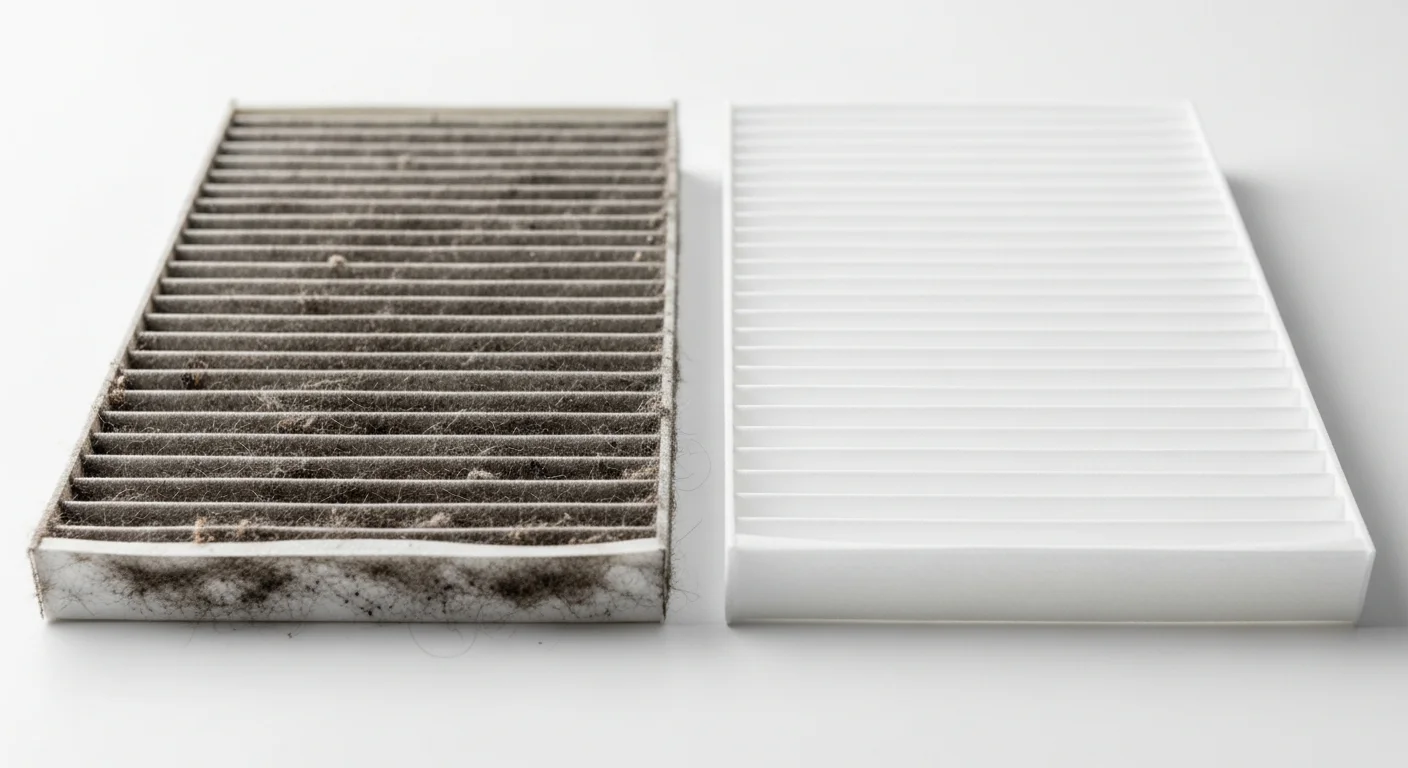
Over time, a severely restricted filter can cause the evaporator coil to freeze, compounding the problem. In dusty areas like the Inland Empire, filters may need replacement more frequently due to higher particulate levels in the air.
DIY Fix
- Locate your air filter (usually in the return air vent or at the air handler unit)
- Hold the filter up to light. If you cannot see through it, replace it immediately
- Use the correct size and MERV rating recommended by your system manufacturer
- Set a reminder to replace filters every 30 to 90 days
When to call a pro: If replacing the filter does not restore cool air within a few hours, the restricted airflow may have already caused secondary damage like a frozen evaporator coil.
How Do You Know if Your AC Has a Refrigerant Leak?
Refrigerant is the lifeblood of your cooling system. If your AC has a leak, the refrigerant level drops and the system cannot absorb enough heat from your indoor air. The result: warm air blowing from your vents even though the system appears to be running normally.
Signs of a refrigerant leak include:
- Hissing or bubbling sounds near the AC unit
- Ice forming on the refrigerant lines or evaporator coil
- The system runs constantly without reaching the set temperature
- Higher-than-normal electricity bills
Why You Need a Pro
Refrigerant handling requires EPA Section 608 certification. This is not a DIY repair. A licensed HVAC technician will locate the leak using electronic detection equipment, repair it, and recharge the system to the manufacturer’s specifications. Ignoring a refrigerant leak damages the compressor over time, which is the most expensive component to replace.
If you suspect a refrigerant leak, schedule an emergency HVAC repair before the problem escalates.
Can Dirty Condenser Coils Make Your AC Blow Hot Air?
The condenser unit sits outside your home and releases the heat your AC has absorbed from indoor air. When the condenser coils are coated with dirt, leaves, grass clippings, or debris, they cannot dissipate heat efficiently. The trapped heat gets recirculated, and your central AC blows hot air instead of cool.
In Orange County, outdoor condensers are particularly susceptible to buildup from pollen, Santa Ana wind dust, and landscaping debris.
DIY Fix
- Turn off the AC system at the thermostat and breaker
- Remove any visible debris (leaves, branches, grass) from around the unit
- Gently spray the coils with a garden hose from the inside out (never use a pressure washer)
- Maintain at least 2 feet of clearance around all sides of the condenser
When to call a pro: If the coils are heavily soiled, bent, or corroded, a professional coil cleaning with specialized equipment is recommended. Annual AC maintenance includes condenser coil cleaning as a standard step.
What Happens When Your AC Compressor Fails?
The compressor is the heart of your air conditioning system. It pressurizes refrigerant and circulates it between the indoor evaporator and outdoor condenser coils. When the compressor fails, the refrigerant cycle stops and your AC blows nothing but warm air.
Compressor failure can be caused by:
- Electrical problems or power surges
- Low refrigerant levels from an undetected leak
- Overheating due to dirty coils or a blocked condenser
- Normal wear and tear on older systems (10+ years)
Why You Need a Pro
Compressor repair or replacement is a major job that requires specialized tools and HVAC expertise. In many cases, if the compressor fails on an older unit, replacing the entire outdoor condensing unit is more cost-effective than repairing the compressor alone. A qualified technician can diagnose whether repair or replacement makes financial sense for your situation.
Could Electrical Issues Be Causing Your AC to Blow Warm Air?
Your AC system relies on multiple electrical components: capacitors, contactors, relays, and wiring connections. If the outdoor condensing unit loses power (perhaps from a tripped breaker or a failed capacitor), the indoor blower will keep running and push unconditioned air through your vents. You will feel air blowing, but it will not be cold.
What to Check
- Look at your electrical panel for tripped breakers. AC systems typically have two breakers: one for the indoor unit and one for the outdoor unit
- If a breaker has tripped, reset it once. If it trips again immediately, do not keep resetting it
- Check the disconnect switch near the outdoor unit to confirm it is in the “On” position
When to call a pro: A breaker that repeatedly trips signals a serious electrical problem, possibly a short circuit, a failing capacitor, or a grounded compressor. This requires professional diagnosis to prevent fire hazards. At 911 Drain Lines and Plumbing, our technicians handle both HVAC and electrical troubleshooting for a complete diagnosis.
Why Does a Frozen Evaporator Coil Make Your AC Blow Hot Air?
A frozen evaporator coil is both a symptom and a cause. When ice builds up on the coil, it insulates the coil surface and prevents heat absorption. Your AC blows warm air because the refrigerant cannot do its job through a layer of ice.
Common causes of a frozen evaporator coil include:
- Restricted airflow from a dirty filter (see #2 above)
- Low refrigerant levels (see #3 above)
- A malfunctioning blower fan
- Running the AC when outdoor temperatures drop below 60 degrees
DIY Fix
- Turn off the AC and switch the fan to “On” to circulate warm air over the coil
- Let the system thaw completely (this can take 2 to 4 hours)
- Replace the air filter while waiting
- Once thawed, turn the system back on in “Cool” mode and monitor for 30 minutes
When to call a pro: If the coil freezes again within 24 hours, there is an underlying issue (likely low refrigerant or a blower problem) that requires professional repair. Learn more in our detailed guide on why your AC keeps freezing up.
Which AC Problems Can You Fix Yourself vs. When Should You Call a Pro?
| Cause | DIY Fix? | Difficulty | Estimated Cost (DIY) | Pro Repair Cost |
|---|---|---|---|---|
| Thermostat set incorrectly | Yes | Easy | $0 to $10 (batteries) | $75 to $150 |
| Dirty air filter | Yes | Easy | $10 to $30 | $75 to $150 |
| Refrigerant leak | No | N/A | N/A | $150 to $400 |
| Dirty condenser coils | Partial | Moderate | $0 (garden hose) | $100 to $250 |
| Faulty compressor | No | N/A | N/A | $1,500 to $3,000+ |
| Electrical issues | Partial | Easy (breaker) | $0 | $100 to $500 |
| Frozen evaporator coil | Partial | Moderate | $0 to $30 | $150 to $600 |
Do not let a broken AC turn into a health risk during a Southern California summer. Heat-related illness is a real danger, especially for children, seniors, and pets.
Contact 911 Drain Lines and Plumbing or call (714) 909-1723 for same-day AC repair and HVAC services across Orange County and the Inland Empire. For professional assistance, contact our professional plumbing services team.
How Can You Prevent Your AC From Blowing Hot Air?
The best way to avoid an AC not cooling emergency is regular maintenance. Here is a seasonal checklist:
- Monthly: Check and replace air filters
- Quarterly: Inspect the outdoor condenser for debris and clear the area around it
- Annually: Schedule professional HVAC maintenance before summer starts (ideally in spring)
- As needed: Listen for unusual sounds, watch for ice on refrigerant lines, and monitor your energy bills for unexplained spikes
Regular maintenance extends the life of your system, maintains efficiency, and catches small problems before they become expensive repairs.
Frequently Asked Questions
Why is my AC running but not cooling the house?
The most common reasons are a dirty air filter, incorrect thermostat settings, or low refrigerant. Start by checking the thermostat (set to Cool, fan on Auto) and replacing the filter. If that does not fix it, you likely need a professional to check refrigerant levels and system components. See our full guide on AC not blowing cold air for more troubleshooting steps.
Can I fix my AC blowing hot air myself?
Yes, for simple issues. Thermostat adjustments, filter replacement, clearing debris around the condenser, and thawing a frozen coil are all safe DIY tasks. However, anything involving refrigerant, electrical components, or the compressor should be handled by a licensed HVAC technician.
How much does it cost to fix an AC blowing hot air?
Costs vary widely depending on the cause. A new air filter costs $10 to $30. Refrigerant recharging typically runs $150 to $400. Compressor replacement can range from $1,500 to $3,000 or more. A diagnostic visit from a qualified technician is the best way to get an accurate estimate for your specific situation.
How often should I service my AC to prevent problems?
Professional HVAC maintenance should be performed at least once per year, ideally in the spring before summer heat arrives. Between professional visits, change your filter every 1 to 3 months and keep the outdoor unit clear of debris. Follow our complete AC maintenance checklist for a step-by-step guide.
Is an AC blowing hot air an emergency?
During extreme heat, yes. Prolonged exposure to indoor temperatures above 90 degrees is a health hazard, particularly for vulnerable populations. If your AC stops cooling during a heatwave in Orange County or the Inland Empire, call (714) 909-1723 for emergency HVAC repair.