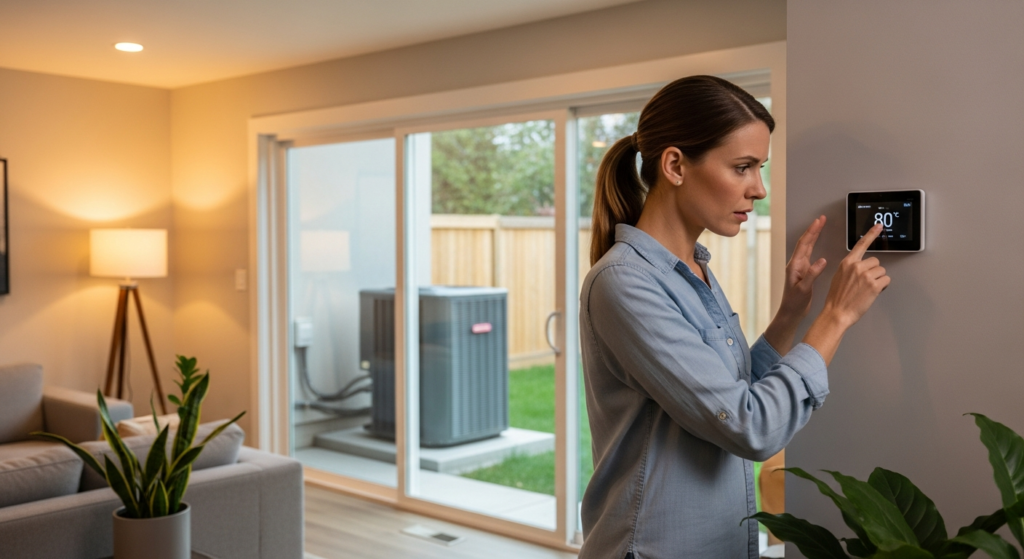




Few things are more frustrating than walking into a warm house on a hot Southern California day, reaching for the thermostat, and realizing your AC is not turning on. No hum, no airflow, nothing. Before you panic or assume you need a full system replacement, the good news is that many of the most common causes are surprisingly simple to diagnose.
In this guide, we cover seven reasons your AC unit is not turning on and walk you through what you can check yourself versus when it is time to call a licensed HVAC professional. For expert help, contact our electrical services team.
1. Tripped Circuit Breaker
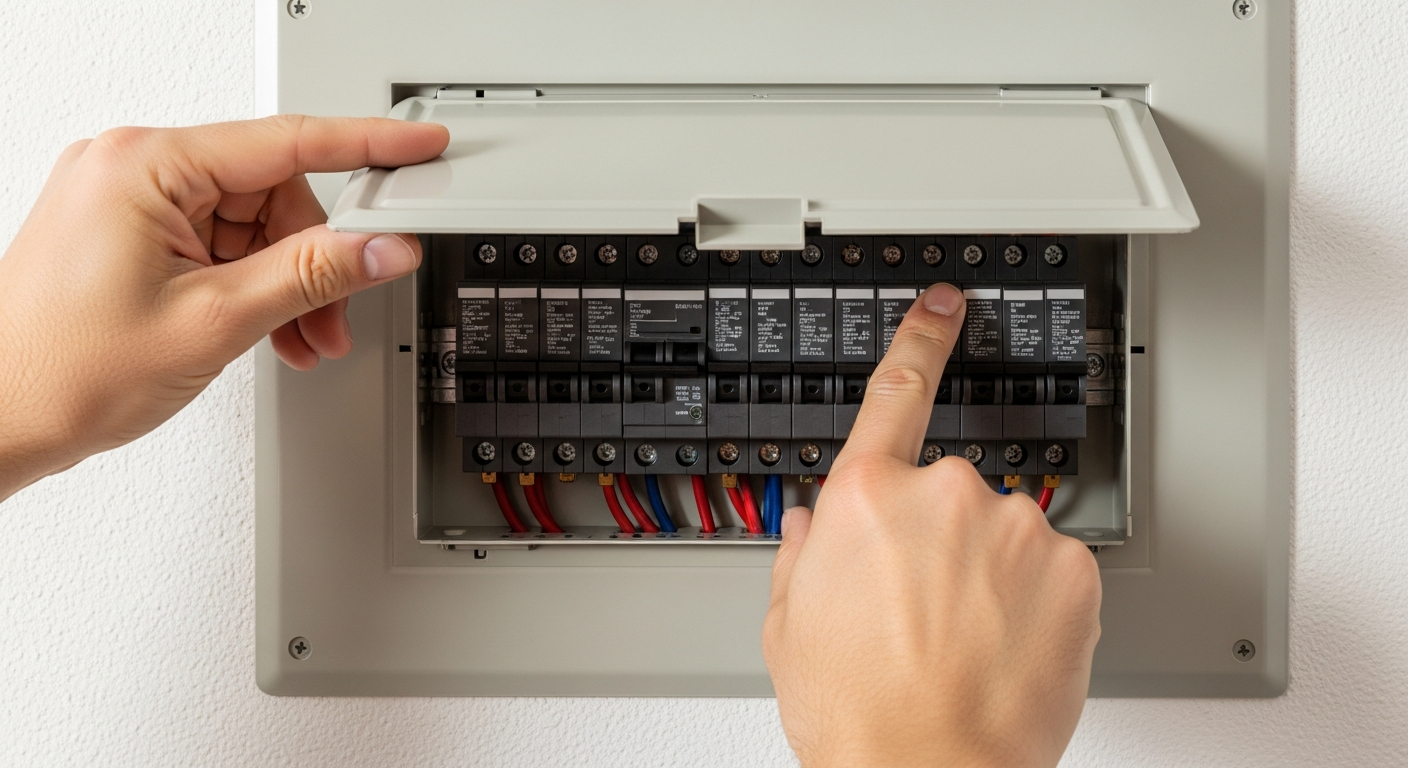
Your air conditioning system runs on a dedicated electrical circuit. If that circuit trips, the entire system shuts down instantly. A tripped breaker is one of the most common (and easiest to fix) reasons an AC is not turning on.
What to Do
- Locate your home’s electrical panel, usually in the garage, basement, or a utility closet.
- Look for a breaker that is in the middle or “off” position. Your AC may have its own labeled breaker.
- Flip it fully to the “off” position, then back to “on.”
- If the breaker trips again immediately, stop and call a professional. Repeated tripping can indicate a serious electrical issue.
2. Thermostat Issues
Sometimes the problem is not the AC itself but the thermostat sending the signal. A thermostat that is not working properly will prevent your system from starting.
What to Check
- Dead batteries: Many thermostats run on batteries. If the display is blank, swap them out.
- Wrong mode: Make sure the thermostat is set to “Cool” and not “Heat” or “Fan Only.”
- Temperature setting: Set the temperature at least 3 to 5 degrees below the current room temperature to trigger the system to kick on.
- Loose wiring: If you are comfortable, remove the thermostat cover and check that all wires are firmly connected.
If your thermostat seems unresponsive even with fresh batteries, it may need to be replaced. Check your HVAC maintenance checklist to see if thermostat inspection is overdue.
3. Clogged Air Filter
A severely clogged air filter restricts airflow to the point where your system’s safety mechanisms shut it down. This is a protective feature designed to prevent the evaporator coil from freezing or the blower motor from overheating.
What to Do
- Locate the air filter, typically near the return air vent or inside the indoor air handler unit.
- Pull it out and hold it up to a light source. If you cannot see light through it, it needs replacing.
- Replace the filter and wait 30 minutes before trying to restart the AC. The system may need time to reset.
Keeping a regular AC maintenance checklist helps prevent filter-related shutdowns before they happen.
4. Safety Switch Triggered
Modern AC systems include a float switch in the condensate drain pan. When the drain line clogs and the pan fills with water, this switch cuts power to the entire system to prevent water damage to your home.
Signs This Is the Problem
- Water pooling around the indoor unit.
- The drain pan is visibly full.
- The system ran fine yesterday but will not start today.
What to Do
- Check the drain pan and condensate line for clogs.
- Clear the line using a wet/dry vacuum on the outdoor drain exit.
- Once the water level drops, the float switch should reset and the AC should power back on.
5. Capacitor Failure
The capacitor is a small but critical component that gives your AC’s motors the electrical boost they need to start. When a capacitor fails, the unit may hum or click but will not actually start running.
Signs of a Bad Capacitor
- A humming sound from the outdoor unit with no fan spinning.
- The AC starts intermittently and then shuts off.
- A clicking noise when the system tries to engage.
- A visibly swollen or leaking capacitor (if you open the access panel).
Important: Capacitors store electrical charge even when the system is off. Do not attempt to replace a capacitor yourself unless you have the proper training and tools. This is a job for a licensed HVAC technician.
6. Contactor Problems
The contactor is an electrical relay inside the outdoor unit that controls the flow of power to the compressor and condenser fan. Over time, contactors can wear out, get stuck, or develop pitted contact points that prevent a solid electrical connection.
Symptoms
- The outdoor unit does not respond at all when the thermostat calls for cooling.
- You hear a faint chattering or buzzing from the outdoor unit.
- The system worked intermittently before failing completely.
Contactor replacement is affordable but requires working with high-voltage electrical connections. Always have a qualified professional handle this repair.
7. Compressor Failure
The compressor is the heart of your air conditioning system. It circulates refrigerant between the indoor and outdoor units, making the cooling cycle possible. When a compressor fails, the entire system stops functioning.
Common Causes of Compressor Failure
- Age: Compressors typically last 10 to 15 years. If your system is older, this could be end-of-life failure.
- Overheating: Restricted airflow, low refrigerant, or dirty coils force the compressor to work harder and overheat.
- Electrical issues: Power surges or faulty wiring can damage the compressor windings.
Compressor replacement is one of the most expensive AC repairs. In many cases, especially for older units, full system replacement is the more cost-effective option. If your AC is not blowing cold air or refuses to start entirely, compressor failure could be the underlying cause.
When to Call an HVAC Professional
Whether your unit refuses to power on or your AC is blowing hot air instead of cool, some problems require professional diagnosis.
Some troubleshooting steps like checking the thermostat, replacing the air filter, and resetting a tripped breaker are safe for homeowners. But many AC issues involve high-voltage electricity, refrigerant, and complex mechanical components that require professional expertise.
Call a licensed technician when:
- The breaker trips repeatedly after resetting.
- You suspect a capacitor, contactor, or compressor issue.
- The system needs refrigerant. Handling refrigerant requires EPA certification.
- You smell burning or notice scorched wires.
- The system is over 10 years old and experiencing frequent breakdowns.
911 Drain Lines and Plumbing offers comprehensive HVAC services throughout Orange County and the Inland Empire, including emergency AC repair. Our licensed technicians can diagnose and fix the problem fast. Contact us or call 911 Drain Lines and Plumbing to schedule a service call.
Need professional help? Learn more about our AC Not Blowing Cold Air? 8 Common Causes and Fixes in Orange County.
Need professional help? Learn more about our HVAC Maintenance Checklist: Seasonal Tips to Keep Your System Running in Orange County.
Frequently Asked Questions
Why is my AC not turning on but the thermostat is working?
If the thermostat display is on and set correctly but the AC will not start, the issue is likely downstream. Check the circuit breaker first. If that is fine, the problem could be a tripped safety switch, failed capacitor, or worn contactor. A professional inspection is recommended if basic troubleshooting does not resolve it.
Can a clogged filter stop an AC from turning on?
Yes. A severely clogged filter restricts airflow enough to trigger the system’s built-in safety shutoff. The fix is straightforward: replace the filter and wait about 30 minutes before restarting the unit to allow the system to reset.
How much does it cost to fix an AC that will not turn on?
Costs vary widely depending on the cause. A thermostat battery or filter replacement is under $20. A new capacitor or contactor typically costs $150 to $400 including labor. Compressor replacement can range from $1,500 to $3,000 or more, at which point full system replacement may make more financial sense.
Related: Ac Freezing Up
Related: Emergency Hvac Repair In Orange County
Should I replace my AC if the compressor fails?
It depends on the age of the system. If your AC is under 8 years old and still under warranty, replacing the compressor is often worthwhile. For systems over 10 to 12 years old, investing in a new, more energy-efficient unit typically provides a better return in the long run.